

















































By Kassia Garfield, MaxStrength Fitness

Arthritis is one of the most common causes of pain and disability in adults, especially as people age. Many people assume that painful joints mean they should avoid exercise and “take it easy.” While rest can help during severe flare-ups, research consistently shows that one of the best long-term treatments for arthritis is strength training. Building muscle not only improves movement and function, but also helps reduce inflammation throughout the body.
Inflammation is a major driver of arthritis pain. In conditions like osteoarthritis and rheumatoid arthritis, the joints become irritated, swollen and stiff. This inflammation can slowly damage cartilage, weaken surrounding tissues and make everyday tasks more difficult. Strength training helps combat this process in several important ways.
First, strength training improves the support system around joints. Muscles act like shock absorbers for the body. When muscles are weak, more stress is placed directly on the joints themselves. Stronger muscles around the knees, hips, shoulders and spine help distribute force more evenly and reduce wear and tear. For example, stronger quadriceps muscles reduce pressure on the knees during walking, stair climbing and standing up from a chair. This often leads to less pain and improved mobility for people with arthritis.
Second, strength training directly lowers inflammation inside the body. Muscle tissue is now recognized as an active organ that releases beneficial substances called myokines during exercise. These compounds help regulate the immune system and reduce chronic inflammation. Regular resistance training has been shown to decrease inflammatory markers such as C-reactive protein and inflammatory cytokines. In simple terms, building muscle changes the body’s chemistry in a positive way.
Strength training also improves body composition, which further reduces inflammation. Excess body fat — especially abdominal fat — produces inflammatory chemicals that can worsen arthritis symptoms. Resistance exercise helps preserve and build lean muscle while reducing fat mass. Even modest improvements in muscle mass and body composition can significantly decrease stress on joints and lower systemic inflammation.
Another major benefit is improved joint stability and balance. Arthritis often causes people to move less because they fear pain or injury. Unfortunately, inactivity leads to muscle loss, stiffness and weaker bones, which can worsen symptoms over time. Strength training reverses this cycle. Stronger muscles improve coordination and joint control, helping people move more confidently and safely. This can reduce falls, improve independence and make daily life easier.
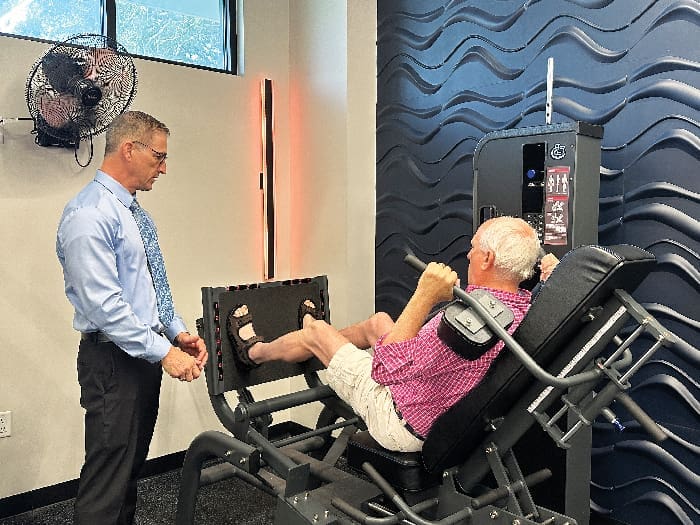
Importantly, strength training does not need to be extreme to be effective. People with arthritis can benefit from controlled resistance exercises using body weight, resistance bands, machines or light free weights. The key is gradual progression and consistency. Exercises should challenge the muscles without excessively irritating the joints.
Many people are surprised that regular strengthening actually decreases pain rather than increasing it. Much of the stiffness people feel in the morning comes from inflammation increasing overnight without movement. This is why movement often feels good. It helps move fluid around the joints. That stiffness is often caused by increased fluid buildup, which takes up joint space and makes movement more difficult. The stronger a person becomes, the less stress placed on the joints, which can decrease swelling and inflammation over time. Over the course of six to eight weeks of adding strength training, many people notice a significant reduction in stiffness.
The benefits extend beyond the joints themselves. Strength training improves energy levels, sleep quality, mood and overall health. Chronic inflammation is linked not only to arthritis, but also to heart disease, diabetes and many other chronic conditions. By improving strength, people often improve their entire health profile.
Ultimately, arthritis is not simply a joint problem. It is strongly influenced by inflammation, muscle weakness and reduced physical function. Strength training addresses all of these factors at once. Stronger muscles protect the joints, reduce inflammation, improve movement and help people maintain an active and independent life.
If you are having a hard time fitting in a workout, try MaxStrength Fitness. We offer effective, efficient and safe 20-minute workouts just twice a week. Our science-backed program is designed to deliver results. Call 850-373-4450 in Niceville or 850-467-9729 in Fort Walton Beach for more information.