








































The Okaloosa County Mosquito Control Program’s schedule for broadcast pesticide spraying, aimed at controlling adult mosquito populations, is outlined below. You’ll also find weblinks to maps showing the general treatment areas organized by days of the week. Spraying takes place in the evening and, per State Law, must be justified. Justification is accomplished though mosquito population surveillance data and other State approved methods. The schedule may shift due to weather conditions or equipment problems. Treatments are set to start at sunset.
Map Link for Nicevile area:
South Okaloosa County – Niceville Area https://myokaloosa.com/sites/default/files/users/pwuser/SouthCountyNicevilleArea2.pdf
MONDAYS:
Wynnehaven Beach, Florosa and Valparaiso
TUESDAYS:
Airport Rd to Destin Bridge, Mary Esther/Fort Walton Beach and Bluewater Bay
WEDNESDAYS:
Streets off of Lewis Turner Blvd to Carmel Dr, Rocky Bayou, Fort Walton Beach from Brooks Bridge to Memorial Pkwy
THURSDAYS:
Shalimar, Ocean City, Mooney Rd area and Niceville
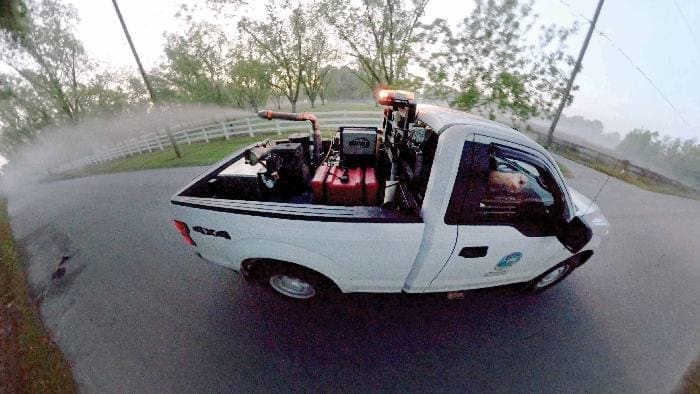
Okaloosa County Mosquito Control and the Florida Department of Health urge the public to remain diligent in their personal mosquito protection efforts. These should include remembering to “SWAT.”
- Stay inside with screened doors and windows when mosquitoes are biting (dusk and dawn).
- When outside, wear clothing that covers skin.
- Apply mosquito repellant that includes DEET [N, N diethyl-m-toluamide] on your skin when you are outside
- Turn over standing water where mosquitoes lay eggs or rid your outdoor area of standing water in which mosquitoes can lay their eggs.
Remember to apply all mosquito repellants in accordance with the recommended frequency and methods suggested by the manufacturer.
Okaloosa County Mosquito Control suggests the following steps to prevent mosquito-borne illnesses:
DRAIN standing water to stop mosquitoes from multiplying:
- Drain water from garbage cans, house gutters, buckets, pool covers, coolers, children’s toys, flower pots or any other containers where sprinkler or rain water has collected.
- Discard tires*, drums, bottles, cans, pots and pans, broken appliances and other items that aren’t being used.
- Empty and clean birdbaths and pets water bowls at least once or twice a week.
- Protect boats and vehicles from rain with tarps that don’t accumulate water.
- Maintain swimming pools in good condition and appropriately chlorinated. Empty plastic swimming pools when not in use.
* Waste tires can be dropped off FREE to residents at the South Okaloosa County Transfer Station and the Baker Landfill. Free waste tire drop-off is limited to passenger car and light truck tires, with a cap of 5 tires per household per month. Businesses are required to pay a small fee.
COVER skin with clothing or repellent:
Clothing: Wear shoes, socks, and long pants and long-sleeves. This type of protection may be necessary for people who must work in areas where mosquitoes are present.
Repellent: Apply mosquito repellent to bare skin and clothing. Always use repellents according to the label. Repellents with DEET, picaridin, oil of lemon eucalyptus, and IR3535 are effective. Netting: Use mosquito netting to protect children younger than 2 months old.
COVER doors and windows with screens to keep mosquitoes out of your house. Repair broken screening on windows, doors, porches, and patios.
The County Mosquito Control Program conducts mosquito spraying throughout the county, excluding federal and state-owned land. Mosquito spray trucks typically begin operating one hour before sunset and/or one hour after sunrise when most mosquito species are active. However, mosquitos can and are active outside these hours. In rare circumstances, broadcast spraying is performed during daylight hours.
Beyond spraying, the County runs a robust larviciding program, treating around 2,000 sites that are regularly monitored. In addition, over 750 ponds and spots with standing water are stocked with gambusia fish, which feed on mosquito larvae and reproduce quickly.
Residents are encouraged to vaccinate their outdoor animals against mosquito-borne diseases. Horses need protection against Eastern Equine Encephalitis (EEE) through vaccination. While West Nile and EEE can pop up year-round, they peak in August, September, and October. Horses require two vaccine shots, spaced 3 to 6 weeks apart, followed by boosters every 3 to 6 months. Dog owners should also ensure their pets are treated for heartworms, as some mosquitoes in Okaloosa County can transmit this disease too.
The Mosquito Control Division of Public Works is open Monday through Thursday from 8 a.m. until 4:30 p.m. and may be reached at 850-651-7394 or 850-689-5772. Mosquito spray schedule, preventative tips and other related information is available on the County’s website at https://www.myokaloosa.com/pw/environmental/mosquito-control.