Home Blog Page 313

Museum Series-Children’s Corner, Planning Meeting

Museum Series: Celebrate America 250! American Revolution

Heritage Museum of Northwest Florida Exhibit

By Barbara Palmgren

The planning committee for America 250! American Revolution met February 13 to be the first to view the special exhibit staged in the new room addition at the Heritage Museum of Northwest Florida. Plans for special events throughout the year will continue and be shared on social media as well as local papers and other media.

Dr. Marie Hallion, Ph.D., curated the panels for the exhibit. Helping Marie was Karl Eschmann, Dooney Tickner and Parker Destin. The staging of the exhibit itself was the responsibility of Dr. Barbara Palmgren with guidance by Dr. Hallion and help from trustee Dr. Kristina Duffy and Arthur Edgar, Museum Manager.

At the meeting, trustee Ken Walsh, Marketing Chair, received ideas from trustee Mike Weaver, radio personality Dan Diamond, and Bay Life publisher Scott Miller. Events throughout the year will be headed by trustee Jene McCracken and Sallie Colwick with a large committee of volunteers.

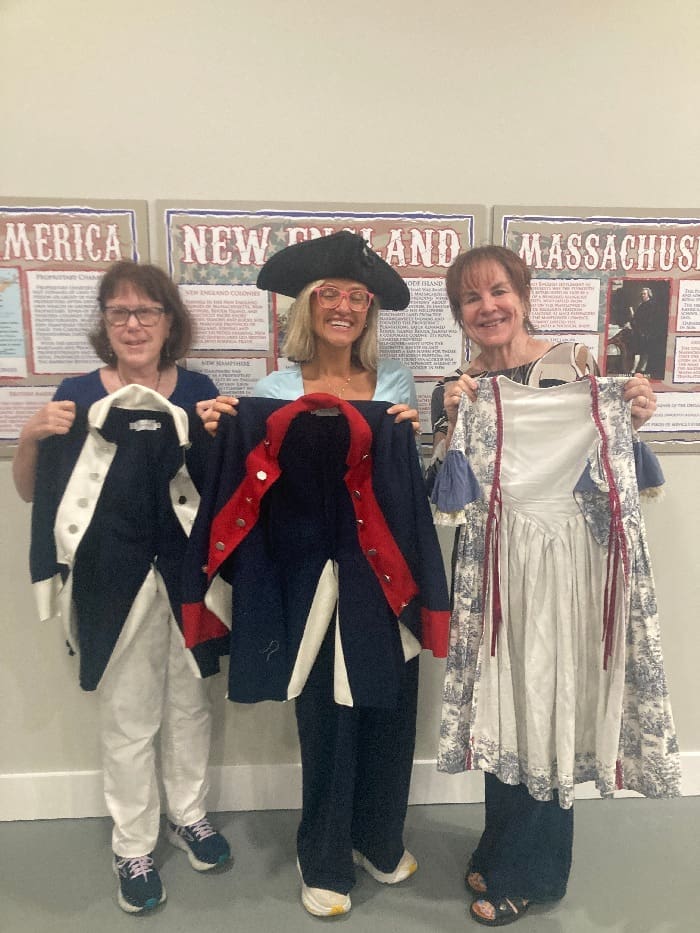
Museum Childrens Corner 1861

Not to be forgotten is the important Children’s Corner exhibit organized by Connie Wolfe who was joined by members Brittni Darbonnier and Mary Blackwell. Imagine children visiting and trying on colonial hats, jackets and dresses from this period in our history. No hats with plumes or decorations for the ladies, oh no, the hat of the period was a mop cap with a slight ruffled edge to ensure hair was contained beneath.

The exhibit can be visited as part of the museum entrance fee with no other fee required. The Heritage Museum of Northwest Florida is open Tuesday through Saturday from 10 a.m. to 4 p.m. and closed Sundays and Mondays.  Please visit a history lesson like no other right her in the Florida Panhandle.

Sean of the South: Dogs

By Sean Dietrich

sean dietrich w dog

My truck cab was filled with three barking dogs and one idiot. The dogs were in the backseat. The idiot was behind the wheel.

“Sit down!” the idiot kept saying.

But my dogs do not sit when I drive. They never sit. They dutifully explore their space when the vehicle is underway.

To the untrained eye my dogs appear to be acting disobediently. But that’s not it. Really, they are just looking for food.

They are always looking for food. They even look for food in places where there has never been any food, such as my bathroom. In a pinch, they will even resort to eating non-food items such as my reading glasses, my sandals, sheetrock, etc.

But they particularly go crazy when in my truck because they know the odds of finding abandoned food here are exponential. Thus, they are constantly on the lookout for expired Corn Nuts, old pistachio shells, or a petrified French fry predating the Reagan administration.

So we finally arrived at the dog park. I turned them loose. They ran. They chased squirrels. They wrestled. They hunted around for any threatening or suspicious objects so they could sniff them, bark at them, then pee on them.

Sean Dietrich Dogs

And then, basically, all the dogs in the dog park just stood around. That’s all the dogs do there. They play for short bursts, then they stand around and look at their owners.

“Why do dogs just stand around at dog parks?” one dog owner asked the group of us dog owners who were also, as it happens, just standing around.

Another dog owner said, “I drove forty-five minutes to get here, just so my dog could stand around.”

One of the other dog owners remarked, “You ever wonder what would happen if dog and human roles were reversed? What if DOGS took US to human parks? Would we go to the bathroom in front of each other?”

We all just looked at him.

And, of course, at dog parks, dogs sniff each other’s rears. I don’t know why dogs do this. This behavior has always perplexed me. They are not picky about whose butts they sniff. They’ll sniff any butt you give them.

I’ve read that rear-sniffing is a primal greeting of sorts wherein complex pheromone scents are exchanged. But I think it’s something dogs do because they like nasty things.

I have been owned by 13 dogs in my lifetime. And I have learned that dogs are not above wallowing in stinky objects. I have seen my dogs roll themselves in everything from cat feces to armadillo remains.

And one time when I was in a major city—this is a true story—walking my bloodhound after hours, we were near the dumpsters. It had been a long night. I had just given a speech and I was tired, so I wasn’t paying attention.

When I got back to the hotel, the clerk looked at me and said, “Sir, there’s something in your dog’s mouth.”

“Drop it, Thelma Lou!” I said.

It turned out to be—remember I am not kidding—a retired breast implant. The thing hit the floor.

The clerk and I stared at the prosthesis and, in a moment I will never forget, the clerk said flatly, “Double D.”

I’m running out of room here, but I’ll close by saying, the more I learn about people, the more I like my dogs.

When Congress Called the Bible “Invaluable”

By Pastor Doug “Doc” Stauffer

Doug Stauffer head shot 2023

Every generation tends to reinterpret history—often not to understand the past, but to justify the present. One of the most repeated claims today is that America was founded as a secular nation, with religion confined strictly to private life. Its proponents present this view as authoritative and academic, yet it is a historically false narrative. Here is one proof text.

In 1782, while the Revolutionary War was still underway, the United States Congress officially examined, approved, and recommended the printing of a Bible for the American people. Known as the Aitken Bible, it remains the only Bible in U.S. history to receive formal congressional endorsement.

The reason was simple yet revealing. Before independence, the colonies relied almost entirely on England for printed Bibles. When war severed that supply, Congress was warned of a national shortage. Rather than dismiss Scripture as a private matter, Congress recognized its necessity. They understood that the Bible was not merely a church book—it was foundational to morality, and morality was essential to liberty.

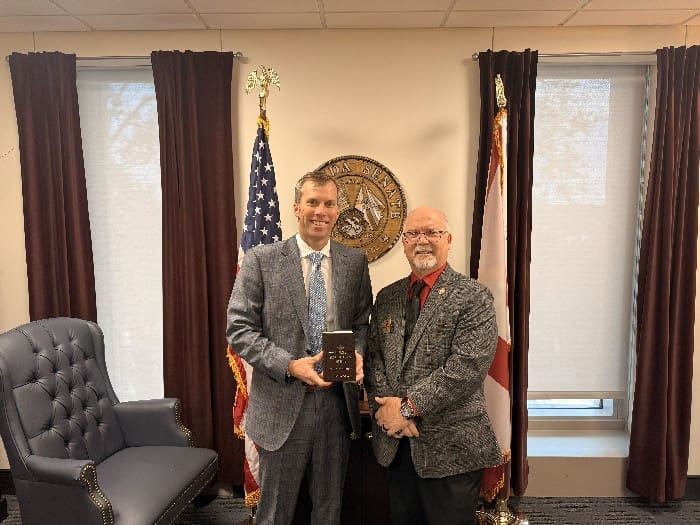
Pastor Senator Jay and Doug Aitken Bible (if use in Walton County)

Congress appointed its own chaplains to examine Robert Aitken’s text of the King James Bible for accuracy. After their review, Congress passed a resolution recommending the Bible to the inhabitants of the United States and describing it as an “invaluable book.” That language was deliberate. Congress was not neutral toward Scripture—they appreciated it.

This single historical act exposes the weakness of the modern secular narrative. The founders did not believe faith threatened freedom; they believed it preserved freedom. They understood that a free people must be virtuous, and that virtue is shaped by biblical truth.

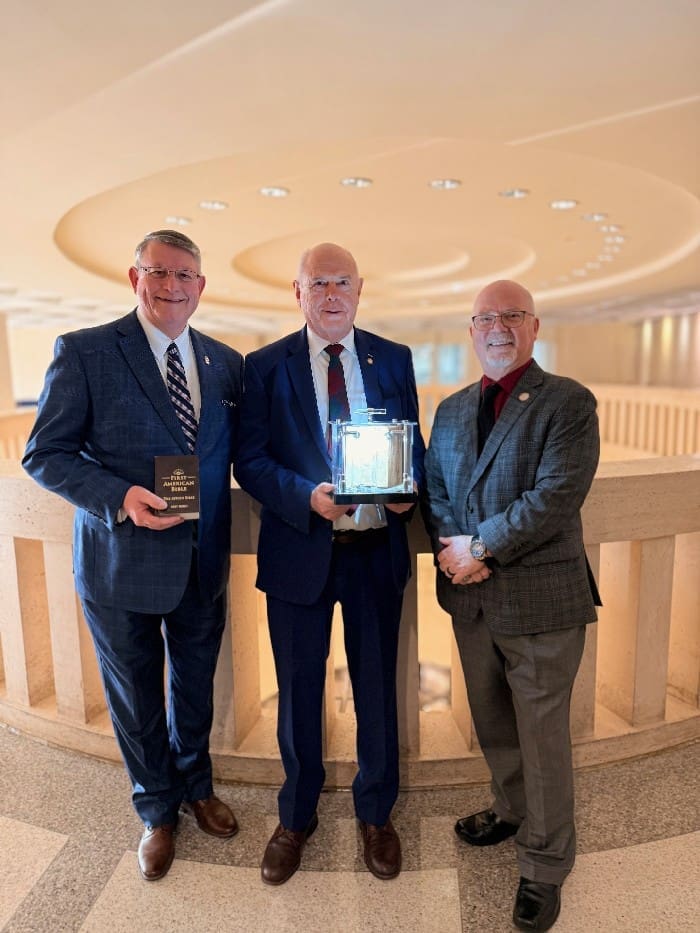
What makes this history especially compelling is that it is not merely an artifact of the distant past. On the opening day of the 2026 Florida legislative session in Tallahassee, an original Aitken Bible was brought into the Capitol, and a copy was presented to every elected official—including Cabinet members and Supreme Court justices. It was a quiet but powerful reminder that God’s Word, once commended by America’s first Congress, still speaks to those entrusted with governing today.

As America approaches her 250th anniversary, the Aitken Bible stands as a witness to a forgotten consensus: liberty does not thrive in a moral vacuum. The same Congress that fought for independence believed the Bible was worthy of public encouragement, national respect, and wide distribution.

Pastor Chaplain Robert Sutton Representative Patt Maney Doug Stauffer with Original 1782 Aitken Bible

When modern voices insist that faith has no place in America’s public life, history answers back—clearly, calmly, and conclusively. There was a time when Congress did not apologize for Scripture, but recommended it to all Americans.

And perhaps the most important question as America approaches her 250th year is this: if the Bible was once considered invaluable to the survival of the Republic, what has been the result of dismissing it as optional?

Golf Series: Blue Tee Restaurant serves golfers and community at Blue Water Bay Golf Club

By Barbara Palmgren

Growing up in Oklahoma, Trinity Coleman worked at her mother’s steakhouse — a restaurant that served three meals a day. Later, she stepped away from the restaurant business as she married Trey Coleman and spent many happy, active-duty military years with Trey and their three children while he served in the United States Air Force.

Five years ago, now retired, Trinity and Trey returned to their restaurant roots. Drawing on years of experience, they purchased Tisano’s restaurant in Bluewater Bay from Mike Tisa. Their culinary creations quickly became part of the Niceville community’s favorite reasons to dine out and support local business.

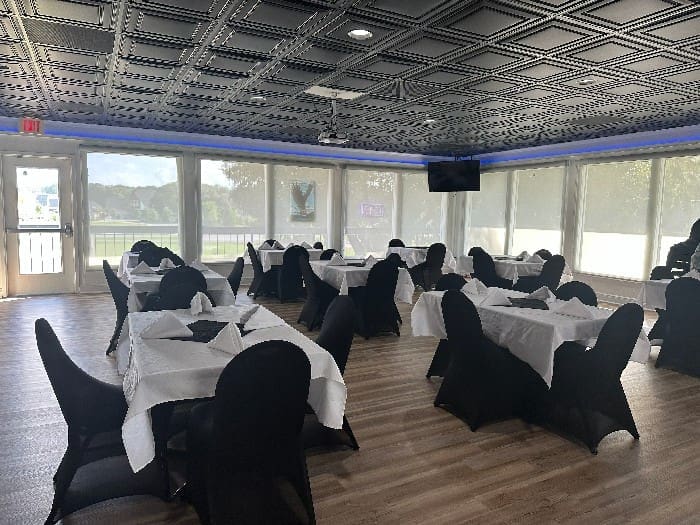
When Trinity learned that the restaurant at Bluewater Bay Golf Club was available, it felt like the perfect opportunity to change locations and help the club once again offer food to golfers and the public. After purchasing the venue in June 2025, Trinity and Trey spent two months preparing the kitchen and restaurant for opening.

What a grand opening it was in August! The community was thrilled that three meals a day would once again be served. And how fitting — Trinity understands that good things come in threes. Her mother’s steakhouse served three meals, three children make the perfect family … and yes, the name Trinity does reference “three,” doesn’t it? Maybe we should rename a line from a famous song — “It’s three o’clock somewhere.”

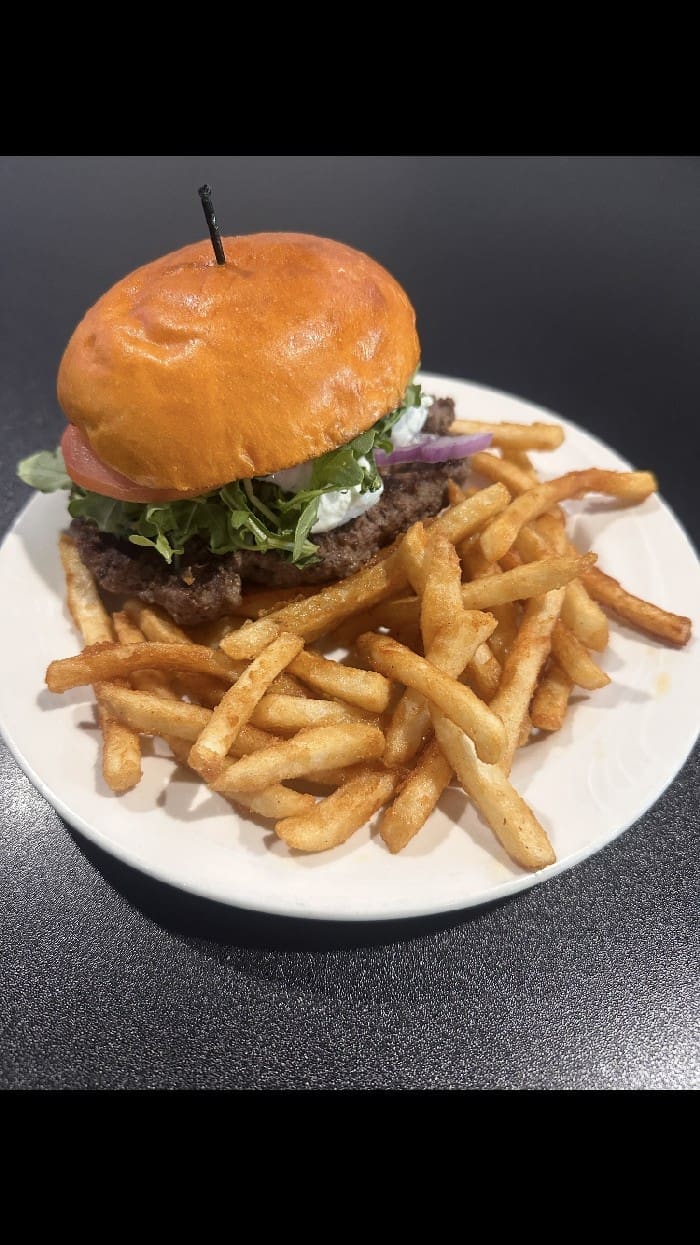
But don’t wait for three o’clock. The Blue Tee opens early with a breakfast menu sure to please, featuring crepes, omelets, egg dishes, burritos, benedicts and more — all the makings of one of the Panhandle’s best breakfast menus.

Trinity says the top lunch sellers are the Club Sandwich and the Reuben, though with so many options, guests may want to return again and again to try them all. Dinner offers a wide variety of choices that won’t disappoint. In addition to the restaurant and bar area, a private banquet room is available for rental. Trinity can design special banquets for groups, and food and drink options are also available for meetings and gatherings. She says golfers especially appreciate having the restaurant open again for food and drinks.

Don’t wait any longer to try this outstanding new restaurant, The Blue Tee, located in the Bluewater Bay Golf Course clubhouse in Niceville. It’s open to the public for breakfast, lunch and dinner, offering a full bar, cocktails and comfort food in a welcoming setting.

Top 5 Supplements to Spring into Health

By Dr. Karen DeVore, Tortoise Clinic

Tortoise Clinic Dr Karen DeVore 2025

Here along the Gulf Coast, the arrival of spring means longer days and a return to the outdoor living that defines our beach communities. For many, it feels like a natural inflection point of renewed momentum and a reminder to re-prioritize energy, strength, and overall well-being.It’s often during this season that people begin reaching for supplements and vitamins in hopes of supporting this shift.

At the Tortoise Clinic, I remind people that supplements are never a substitute for the fundamentals including balanced, protein-forward meals made from real food, restorative sleep, building and maintaining muscle mass, hydration, and thoughtful stress management. Supplementation and targeted nutrient support are tools within a larger health strategy, most effective when guided by informed science and thoughtful clinical oversight.

Tortoise Clinic Supplements iStock 2080339390

Not every supplement is appropriate for every person. When selected strategically, with attention to quality, bioavailability, and individual physiology, they can support the systems that drive sustainable energy and resilience.

Here are five I commonly evaluate this time of year, and how I think about applying them.

Vitamin D – A Hormone with Broad Impact

Despite its name, Vitamin D functions as a hormone in the body. It plays a role in immune balance, bone strength, muscle function, and mood regulation. Vitamin D receptors are found throughout the body, which helps explain its wide-reaching influence.

Deficiency remains common, even living in Florida. Indoor work, sunscreen use, skin tone variability, and seasonal shifts all contribute. When levels are suboptimal, people may notice fatigue, slower recovery, decreased muscle strength, or a subtle dip in mood.

When I look closer: recurrent illness, low energy that doesn’t improve with rest, mood changes, bone or muscle concerns, and limited sun exposure

Practical Tip: Vitamin D absorbs best when taken with food that contains healthy fats. Testing provides clarity — optimal levels are individualized, not guessed.

Magnesium – Calm Energy & Recovery

Magnesium supports muscle relaxation, sleep quality, blood sugar balance, and healthy stress response. It participates in hundreds of biochemical processes and is one of the most common nutrients I see run low.

Despite the beauty of coastal living, daily demands such as work, activity, travel, and stress still accumulate, and magnesium depletion is common.

Two forms I often consider:

Magnesium Glycinate: Supports relaxation and restorative sleep.

Magnesium Threonate: May support focus, cognitive clarity, and emotional steadiness.

When I look closer: muscle tension, poor sleep, stress reactivity, headaches, and difficulty focusing

Practical Tip: Magnesium glycinate is often best tolerated in the evening. Magnesium threonate can be used in the morning when focus support is desired. Some individuals divide doses based on response. Because magnesium influences muscle relaxation, higher amounts may also influence digestive rhythm. Gradual adjustments help the body adapt comfortably.

Omega-3 Fatty Acids – Inflammation & Heart Support

Omega-3 fats help regulate inflammation and support heart health, joint comfort, brain function, and mood stability. Even with access to fresh seafood, consistent intake of meaningful amounts of omega-3s is less common than many assume. Modern dietary patterns tend to favor inflammatory fats over anti-inflammatory ones. As activity increases and seasonal allergens rise, balanced inflammatory support becomes increasingly important.

When I look closer: joint stiffness, cardiovascular risk factors, brain fog, mood variability, and seasonal inflammatory symptoms

Practical Tip: If fish oil results in occasional upper digestive discomfort or burping freezing capsules may help. Those taking blood thinners should consult their provider. Wild-caught fatty fish remains an excellent whole-food option.

Probiotics + Prebiotic Fiber – Digestive Precision

The gut influences immune function, hormone balance, inflammation, and mood. Probiotics introduce beneficial bacteria, the “seeds,” while prebiotic fibers provide the nourishment that allows them to flourish. Together, they help shape digestive terrain.

Not all probiotics are the same. Strains and potencies vary, and prebiotic fibers can aggravate some digestive systems if introduced too quickly. Because not every gut responds the same way, they should be introduced thoughtfully and increased gradually.

It’s also important to recognize that not every digestive system benefits from supplemental probiotics or prebiotic fibers. Certain digestive patterns or underlying gut conditions may require a more targeted approach rather than broad supplementation.

When I look closer: bloating or irregular digestion, recent antibiotic use, immune imbalance, and skin or hormone concerns

Practical Tip: Start low. Increase gradually. Monitor response carefully. Individuals using GLP-1 medications may benefit from additional digestive support due to slowed gastric emptying, but adjustments should always be gradual and individualized.

B-Complex Vitamins – Cellular Energy & Stress Support

B vitamins are essential for energy production, nervous system signaling, red blood cell formation, and stress adaptation. They are not stimulants. They support the body’s ability to generate steady, efficient energy. Stress, hormonal transitions, digestive variability, dietary restriction, or genetic factors can increase demand.

When I look closer: persistent fatigue, brain fog, elevated stress, hormonal shifts, and limited dietary variety

Practical Tip: Form matters. If B12 has not been helpful in the past, the issue may be the form rather than the dose.

Supplements are tools, not shortcuts. Quality matters. Formulation matters. Dosage matters. Context matters most. The goal is not to take more. The goal is to take what is appropriate for your body, your current demands, and your season of life.

Spring is about renewal, not rushing. Sustainable health is built through steady habits, thoughtful evaluation, and informed decisions, not trends or impulse purchases. When the foundation is strong and support is chosen strategically, small adjustments create meaningful momentum.


Cutting-Edge Care – Without the Cutting: A Smarter Option for Joint and Muscle Pain

The Reset Room 0386

“Before you schedule the surgery, ask a better question: Is there a way to help my body heal first?”

When did surgery become the first conversation instead of the last resort?

Every week, I meet people who have been told their only real option for chronic joint or soft tissue pain is an injection… or a surgical consult. Rotator cuff irritation. Chronic knee pain. Plantar fasciitis that just won’t calm down. Lingering hip or low back injuries. They’re frustrated. They’re active. And they’re not ready to go under the knife.

That’s where SoftWave Tissue Regeneration Technology (TRT) comes in.

SoftWave TRT is an advanced acoustic wave therapy designed to stimulate the body’s own healing response. It uses high-energy sound waves that penetrate injured tissue and trigger biological repair processes. These waves increase blood flow, recruit stem cells, reduce inflammation, and help restart stalled healing cycles. This regenerative response has been increasingly supported in orthopedic and sports medicine research.

In simple terms? It helps your body fix what it hasn’t been able to fix on its own.

Unlike surgery, SoftWave is non-invasive. There are no incisions. No anesthesia. No downtime. Treatments are performed in-office, and most patients walk out and go right back to their day. For many people trying to avoid surgery, that matters.

Take one of my recent patients, an avid recreational dancer. Chronic pain in both knees had limited her ability to move and disrupted her sleep for months. Instead of an orthopedic consult, she chose to try SoftWave first. After the very first treatment, she felt a noticeable difference. By the end of her third treatment, her pain had significantly decreased, her range of motion improved, and she was back on the dance floor — without surgical intervention. She went from dancing only a few hours each week to several hours each night. She was even able to travel to Peru for 14 days to compete in an international competition.

Is SoftWave TRT a miracle cure? No. But it is a powerful regenerative tool when applied appropriately.

SoftWave is commonly used for tendon and ligament injuries, joint degeneration, plantar fasciitis, muscle strains, and chronic inflammatory conditions. It works especially well for patients who feel stuck — those who’ve tried rest, medications, injections, or traditional therapy without lasting results.

At The Reset Room, we don’t jump straight to surgery conversations. We evaluate. We assess movement. We look at the root cause. And when appropriate, we use technologies like SoftWave TRT to help patients heal rather than simply manage pain.
Surgery has its place. There are times when it is necessary and appropriate. But it should not be the automatic next step for every musculoskeletal issue.

Too often, people are told to “wait until it gets worse” or move straight toward injections
and procedures without first exploring regenerative options. That mindset is outdated.
If you’re active, motivated, and not ready to accept that pain is just part of aging, there might be another path.

SoftWave TRT offers a way to support healing, restore function, and stay in the game —
without incisions, anesthesia, or long recovery timelines. Healing is possible. Sometimes it just needs the right signal.

About the Author
Dr. Jennifer Trendt is a chiropractor and founder of The Reset Room, a chiropractic and regenerative therapy studio specializing in non-surgical solutions for joint and soft tissue injuries. She focuses on movement restoration and advanced technologies such as SoftWave Tissue Regeneration Technology (TRT).

Why Business Professionals Struggle to Exercise – and Why Strength Matters More Than They Think

For many business professionals, exercise is an ongoing frustration. The desire is there, the benefits are well known, yet workouts are often the first thing sacrificed when schedules tighten. Long hours, constant demands, and high expectations make consistent exercise feel unrealistic. But beneath the surface, the struggle is about more than time—it reflects how strength, standards, and performance are viewed in professional life. It is hard when social media glorifies different time hacks and getting up at 4 am for workouts. That is just feasible for everyone.

Time pressure is the most obvious barrier. Early meetings, late emails, and packed calendars leave little space for structured exercise. Even when time technically exists, energy does not. Modern business roles are mentally exhausting, requiring continuous decision-making, problem-solving, and emotional regulation. By the end of the day, professionals may feel depleted despite having barely moved their bodies.

Work culture compounds the issue. In many industries, long hours are equated with commitment and success. Stepping away to exercise can feel irresponsible or self-indulgent, especially in competitive environments. Physical training is quietly categorized as optional, while work obligations are treated as non-negotiable. What people don’t realize is the long sedentary hours are taking more of a toll on the body than you might think. Sitting 8-10 hours a day is not how our bodies were designed.

Ironically, this mindset ignores an important truth: physical strength closely parallels professional strength. Building muscle requires consistency, discipline, patience, and the willingness to tolerate discomfort—qualities that also define effective leadership and career growth. Strength training teaches delayed gratification, resilience under stress, and the ability to perform even when conditions are not ideal. These traits translate directly to the workplace.

Yet many professionals fail to apply the same standards to their health that they apply to their work. In business, clear expectations drive behavior. Deadlines are met because they matter. Metrics are tracked because they signal performance. Exercise, by contrast, often lacks a defined standard. Without a minimum expectation—two strength sessions per week, for example—it becomes negotiable, and negotiable commitments rarely survive busy schedules.

There is also a tendency toward all-or-nothing thinking. Professionals accustomed to high performance may believe that if they cannot train perfectly, they should not train at all. Missed workouts become failures rather than temporary setbacks. Over time, this erodes consistency and confidence, making exercise feel like another area of underperformance.

The consequences are not limited to physical health. Lack of strength contributes to chronic fatigue, poor stress tolerance, declining posture, and increased injury risk. These physical limitations quietly undermine focus, patience, and decision-making—the very qualities professionals depend on to succeed.

The solution is not more motivation, but clear standards and intentional stress. Strength improves only when the body is challenged beyond its current capacity. Similarly, professional growth requires deliberate effort, not comfort. Progressive resistance training—gradually doing more over time—creates the stress that forces adaptation. In work and in health, growth follows the same rule: without challenge, nothing changes.

For business professionals, exercise should not be framed as leisure or self-care alone, but as performance maintenance. Setting a non-negotiable standard for physical strength reinforces identity, discipline, and resilience. It sends a clear message: the same commitment applied to career success applies to the body that sustains it.

In the end, strength is not a distraction from professional life. It is a reflection of it. And like any meaningful standard, it must be defined, protected, and upheld—especially when life gets busy.

If you are having a hard time fitting in a workout, try MaxStrength Fitness. We do effective, efficient and safe 20-minute workouts, just twice a week. We deliver results with a science backed program. Give us a call at 850-373-4450!

Is Cholesterol Our Friend?

By Kay Leaman, Health Architect, HealthyDay HealthyLife

By Kay Leaman, Health Architect, HealthyDay HealthyLife

I love learning new things and passing them on to all of you. When it comes to our health, knowledge empowers us to navigate our health journey. We’ve heard for a long time that high cholesterol is bad. My cardiologist wanted to put me on a statin even though my cholesterol was in a normal range; I declined.

So, let’s take a look at what cholesterol does.

Cholesterol is a fat related compound found in all body tissues and in animal products. It is made within the body, primarily by the liver. Some is also produced by the intestinal wall. The body uses cholesterol to make hormones and vitamin D when we are exposed to the sun. The brain is our most cholesterol rich organ and is important in brain health. It is also our body’s repair substance, creating scar tissue and patching damaged arteries. It, along with saturated fats, in the cell membranes gives our cells stability.

Cholesterol is also a primary component of the myelin that surrounds each nerve cell and acts a protective sheath giving insulation and allowing more efficient nerve impulse conduction.

Note: Many times, when our cholesterol is high, it’s because the body needs it to perform its functions.

News Flash: Our LDL cholesterol is not the real problem. It’s the oxidized LDL combined with arterial inflammation that can lead to arterial calcification (plaque formation) and hardening of the arteries.

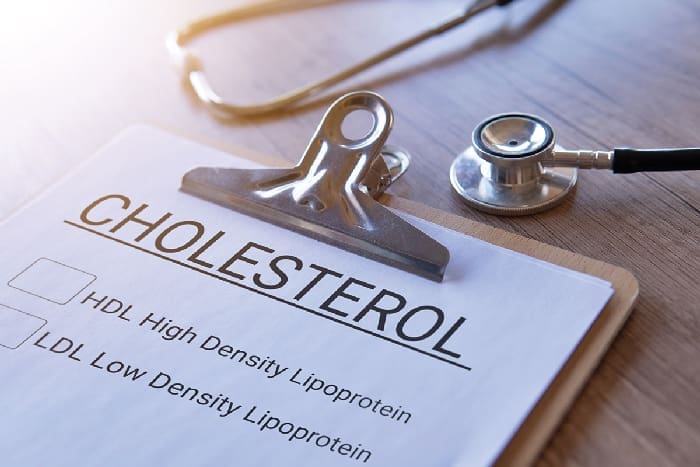
cholesterol iStock 2157258077

If the percent of LDL cholesterol molecules that are oxidized is low (less that 10% of total LDL) and arterial inflammation is kept at a minimum we won’t need to worry about the levels. What is needed to keep these in check is anti-oxidants (nutrients, not medication).

A little science:

Homocysteine along with free radicals oxidizes the arterial lining along with the LDL and triglycerides which leads to the inflammation. This in turn releases the C-Reactive protein (produced by the liver) which is a known marker of arterial inflammation (5-7). Homocysteine causes nicks or cracks in the endothelium (where inflammation takes place) and the oxidized LDL sticks to these nicks. LDL cholesterol that is not oxidized does not stick to these nicks, no matter how much there is.

This is good news because our cells need it to function and without it we would die. Lastly, many health problems can arise if our levels are too low.

There are certain labs that can test and inform you where you actually stand. One doctor recommended lab is Life Extension. The tests to request:

  • Oxidized LDL Cholesterol
  • HDL Cholesterol, High sensitivity CRP
  • Homocysteine (You can request this test with your normal blood work.)

The Big Take Away: If your oxidized LDL is low, and you boost your HDL and keep your homocysteine levels low, you won’t be at an increased risk for heart attacks or death.

Our bodies are complex and so many of the functions are interwoven and dependent on each other. Every step we take in our journey makes a difference.

Have a fabulous Valentine’s Day (A day to love others and yourself!) and a healthy 2026.

Here’s to Health!

succeed.hdhl@gmail.com

When Spring Comes Back to Life

By Dr. Richard Chern, MD 

dr richard chern 2023

We don’t notice it happening at first. Winter rarely announces itself all at once—it settles in quietly. Shorter days. Colder mornings. Longer evenings spent on the couch. Same house, same routine, but something feels different. There’s less energy, less motivation, less desire to care.

Where we once enjoyed moving our bodies, getting outside, and feeling strong and capable, now the alarm rings and staying in bed feels easier. Joints ache. Muscles feel weaker. Even simple routines—exercise, cooking well, making time for ourselves—feel like work instead of something life-giving. It’s easy to dismiss it as stress, age, or just “the time of year.”

As spring approaches, the light begins to change. A familiar spark returns—the desire to feel better, to take care of ourselves again, to re-engage with life. But the energy we expect doesn’t necessarily follow the season. Motivation fades as quickly as it appeared, leaving frustration and the quiet question: Why don’t I feel like I should?

Chern Spring Tree Budding iStock 2209240562

At The Hormone Restoration Center, we hear this story every year.

Winter blues aren’t just about the weather. They’re also about hormones. As daylight decreases, hormonal signaling in the body shifts. Testosterone, estrogen, progesterone, thyroid hormones, cortisol—and even Vitamin D—all influence how we feel, how we move, how we sleep, and how we recover. What many people don’t realize is Vitamin D isn’t just a vitamin; it functions as a hormone, affecting mood, immune health, muscle strength, and bone density. During the winter months, when sunlight exposure drops, Vitamin D levels often fall right along with energy and motivation.

When hormones decline or fall out of balance, energy drops, mood flattens, sleep suffers, and winter feels longer and heavier than it should.

Hormones also do far more than influence mood or libido. They are foundational to the body itself. Testosterone and estrogen are essential for maintaining muscle mass in both men and women. When levels are low, the body loses lean muscle—even with consistent exercise. As muscle declines, metabolism slows, joints lose support, and fatigue becomes the norm rather than the exception.

Hormones play a critical role in bone health as well. Estrogen, testosterone, and Vitamin D work together to protect bone density. When any of them are deficient, bone loss accelerates, increasing the risk of osteoporosis and fractures in both men and women. This loss happens quietly, often for years, before it ever makes itself known.

This is why so many people feel tired, frustrated, and fragile. Why workouts stop working. Why motivation disappears. Why winter feels like survival instead of rest—and why spring can feel like a letdown.

Hormone optimization helps.

When hormones are restored to healthy levels the body responds. Energy improves. Muscle becomes easier to build and maintain. Bones are protected. Sleep deepens. Mood stabilizes. That natural desire to care for yourself returns.

Hormone Replacement Therapy isn’t about pushing the body beyond normal. It’s about restoring what time, stress, and life have gradually taken away.

At The Hormone Restoration Center, we take a comprehensive, personalized approach. You’re not broken, and you’re not alone. You don’t have to wait for another season to feel like yourself again. Just call us: (850) 837-1271. It might just change your life.

Your Brain Isn’t Failing – It’s Overloaded

By Melanie Yost, LCSW

Melanie Yost

At Be Well Solutions, we hear a version of the same sentence almost every day: “I just don’t feel like myself anymore.”

Capable, intelligent, high-functioning adults describe brain fog, poor focus, low motivation, irritability, anxiety, forgetfulness, and emotional overwhelm. Many quietly worry they’re developing ADHD, depression, or even early dementia – and that fear alone adds another layer of stress.

But in many cases, something else is happening.

image0

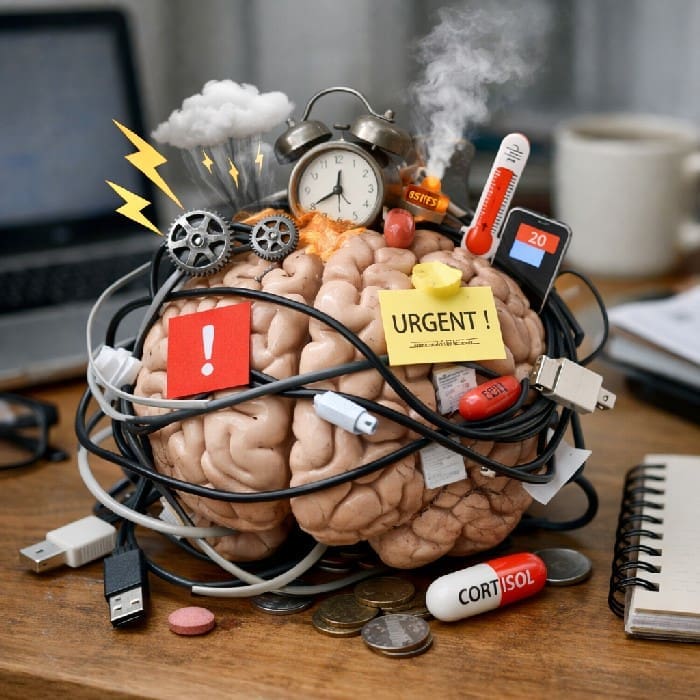
We are living in a time of stacked, chronic stress. Not one crisis followed by recovery, but a steady stream of pressure – financial concerns, job uncertainty, nonstop notifications, caretaking responsibilities, health worries, social tension, constant news cycles, and sleep disruption layered on top of it all. Individually these may not seem overwhelming, but together they keep the nervous system in continuous activation.

And here’s what matters: your brain interprets all of it as threat.

Your brain doesn’t distinguish between a physical danger and economic stress or email overload. When it senses an ongoing threat, it shifts from performance mode into survival mode.

Under chronic stress, your brain’s prefrontal cortex – the part responsible for focus, planning, motivation, and emotional regulation – becomes less efficient. That’s why organized adults suddenly feel scattered, procrastinate, and struggle to make simple decisions. At the same time, the brain’s amygdala becomes more reactive, increasing anxiety, irritability, and that constant “on edge” feeling. Additionally, the hippocampus, which supports memory, becomes sensitive to stress hormones, leading to word-finding difficulty and forgetfulness, symptoms that often scare people into thinking something more serious is wrong.

Be Well Brain

Stress is not just emotional. It is biological.

The good news is that the brain is adaptable. It shifted to protect you, and with the right support, it can shift back toward clarity and resilience.

Daily nervous system recovery, consistent sleep, reducing multitasking, real social connection, and physical brain support through movement and nutrition all make a meaningful difference. Small, steady changes help signal safety to the brain.

But we also believe something powerful happens when you can actually see how your brain is functioning.

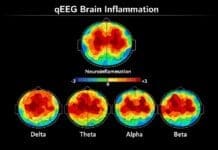
At Be Well Solutions, we offer a complimentary QEEG Brain Map – a simple, non-invasive assessment that measures brainwave patterns and shows us how different regions are communicating. Instead of guessing, we can identify stress-driven overactivity, underperforming executive networks, and imbalances that may be contributing to fog, anxiety, or low motivation.

When we understand what’s happening, we can create a targeted plan to help your brain function better – not just temporarily cope, but truly improve.

If you’ve been thinking, “I don’t feel like myself,” that might be your brain asking for support.

You are not broken.

You might simply be overloaded – and we’re here to help you move forward with clarity.

Be Well Solutions and Complete Ketamine Solutions Destin |

www.CompleteKetamineSolutions.com | 850-786-2051

Secret Link