












































By Kassia Garfield, Owner, MaxStrength Fitness

When was the last time you thought about how you get out of a chair? It is something most of us do dozens of times a day without giving it a second thought. But try this simple test: Sit in a sturdy chair, cross your arms over your chest and stand up without using your hands to push yourself up. Then sit back down under control.
Did it feel easy? Did you have to rock forward, push through your thighs or reach for the armrests? Maybe you surprised yourself. Did you flop back with no control?
This simple movement can tell you something important about your physical health, and it is worth paying attention to long before it becomes a problem.
If that did feel easy, put one leg out, almost like you are going to stand up just using one leg. Try both sides. Did one side feel easier? Could you do it at all? This could show an imbalance from side to side.
More Than Just Getting Out of a Chair
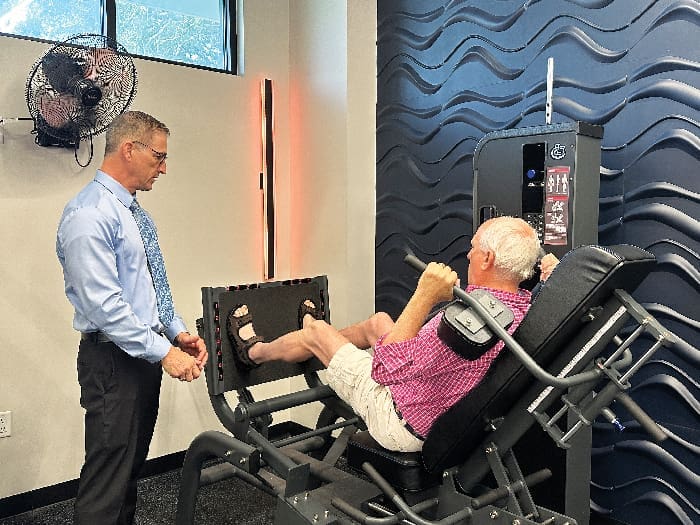
Standing up from a chair requires a combination of leg strength, balance, coordination and control. Your quadriceps, glutes and other muscles must generate enough force to lift your body weight against gravity. Your nervous system must coordinate those muscles, and your balance system must keep you stable as your center of gravity shifts.
As we age, these abilities can gradually decline. We may lose muscle mass, muscle strength and the ability to produce force quickly. These changes are part of a process called sarcopenia, the age-related loss of muscle mass and function. Every time you use your hands, you are not using your legs, slowly weakening them.
The tricky part? It often happens so gradually that we don’t notice.
You might start using the armrests because it is easier. You might push off your thighs without thinking about it. You might avoid sitting on low couches or choose a higher chair because standing up feels more comfortable. Eventually, you may find yourself needing help with something that used to be automatic.
The change doesn’t happen overnight. It can sneak up on you, one small adjustment at a time. Using your arms might only take 10% of the load off your legs, but that is slowly reducing how much strength you need, and your body accommodates to doing less. Beyond the natural loss of muscle as you age, the lack of using the strength you have also progresses the muscle loss.
Why This Matters for Longevity
The ability to stand up from a chair is more than a measure of leg strength. It is one indicator of functional capacity: Your body’s ability to handle the physical demands of everyday life.
Research has linked poorer performance on chair-rise tests and other measures of physical function with increased risks of disability, loss of independence and mortality. These tests do not predict an individual’s future with certainty, but they can help identify when physical capacity may be declining.
Think about what happens when getting out of a chair becomes difficult. Getting off the toilet, climbing stairs, getting into a car and rising from the floor can become harder, too. Activities that once required little thought may start limiting where you go and what you do.
Maintaining strength gives you a greater physical reserve. If you have more strength than your daily activities require, you have more capacity to handle an illness, recover from a hospital stay or manage an unexpected challenge. That reserve can make a meaningful difference in how independently you live as you age.
The Good News: Strength Is Trainable
One of the biggest misconceptions about aging is that getting weaker is inevitable and there is little we can do about it. Although aging brings biological changes, muscle strength can improve well into older adulthood. It’s never too late to start.
Progressive resistance training challenges muscles to produce force and adapt. Exercises that strengthen the quadriceps, glutes and other lower-body muscles directly support movements such as standing, climbing stairs and walking. With appropriate training, people can improve their strength and ability to perform everyday tasks and improve balance.
The goal isn’t necessarily to lift the heaviest weight in the gym. It is to maintain the physical ability to do the things that matter to you.
That might mean getting up from the floor to play with your grandchildren, carrying groceries, traveling, gardening or simply getting out of your favorite chair without assistance.

Try the test, but don’t treat it as a diagnosis. Use a sturdy chair against a wall, and only attempt the movement if you can do so safely. If you feel unsteady, have significant pain or are concerned about falling, don’t attempt it alone. A physical therapist or qualified exercise professional can help assess your ability and find a safe starting point. Included are the norms for how many sit-to-stands (no hands) someone can do in 30 seconds. Below the norm puts you at a high risk for falls.
Your future independence is built through the physical capacity you maintain today. Don’t wait until standing up becomes difficult to start working on your strength.
Sometimes, one of the most important measures of how well you are aging is something as ordinary as getting out of a chair.
If you are having a hard time fitting in a workout, feeling like you don’t know where to start or just need some help, try MaxStrength Fitness. We do effective, efficient and safe 20-minute workouts, just twice a week. We deliver results with a science-backed program. Give us a call at 850-373-4450 (Niceville) or 850-467-9729 (Fort Walton Beach)!